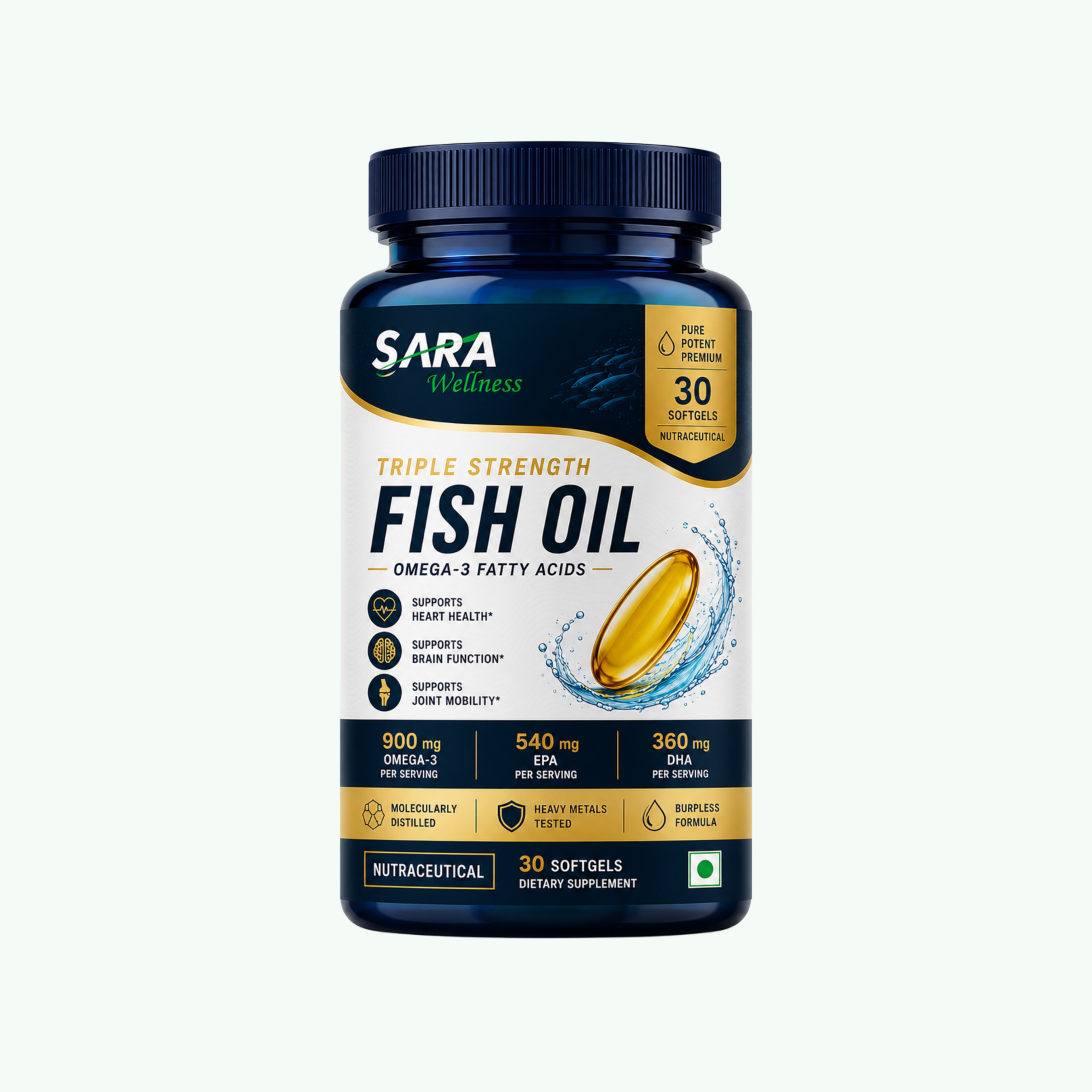
Triple Strength Fish Oil 30's
Thirty softgels doesn't sound like an ambitious number until you realize it's exactly the size a nervous first-time buyer wants to see on a shelf. One month. Low commitment. Easy reorder decision if it works, easy write-off if it doesn't. Triple Strength Fish Oil 30's is built around that logic, and for a lot of import markets, it's the smartest way to launch a new omega-3 SKU without flooding retail shelves with a size nobody's ready to commit to yet. Don't mistake the small count for a small formula, though. This is a genuine triple-strength product, meaning the EPA and DHA concentration per softgel sits well above standard fish oil, delivered in the triglyceride form the body absorbs most efficiently. Molecular distillation strips out mercury, PCBs and other contaminants that raw fish oil carries before concentration, and every finished batch is checked against TOTOX oxidation limits so the product a customer opens six months from now tastes as clean as the one that just left our facility. For distributors testing a new territory or launching a private label line without overcommitting inventory upfront, this pack size removes a lot of the guesswork. Smaller cartons, lower freight weight per unit, faster sell-through analysis. If the 30-count moves, scaling to 60s and 90s under the same brand is a straightforward next order, not a renegotiation. We handle both branded supply and full contract manufacturing here, adjusting capsule count, label artwork and carton configuration to match what a buyer's specific market actually wants rather than pushing a one-size template. Every consignment ships with a Certificate of Analysis, heavy metal screening results, and the export paperwork customs officers expect to see, because the fastest way to lose a container at the port is missing documentation, not a missing feature. Fifteen years exporting nutraceuticals from India has shown us that new-market launches succeed or stall based on how easy the exporter is to reach when a question comes up mid-shipment. We keep that communication direct, flexible on minimum order quantities for first orders, and consistent on delivery timelines, so a trial-size product doesn't come with trial-level service attached to it.
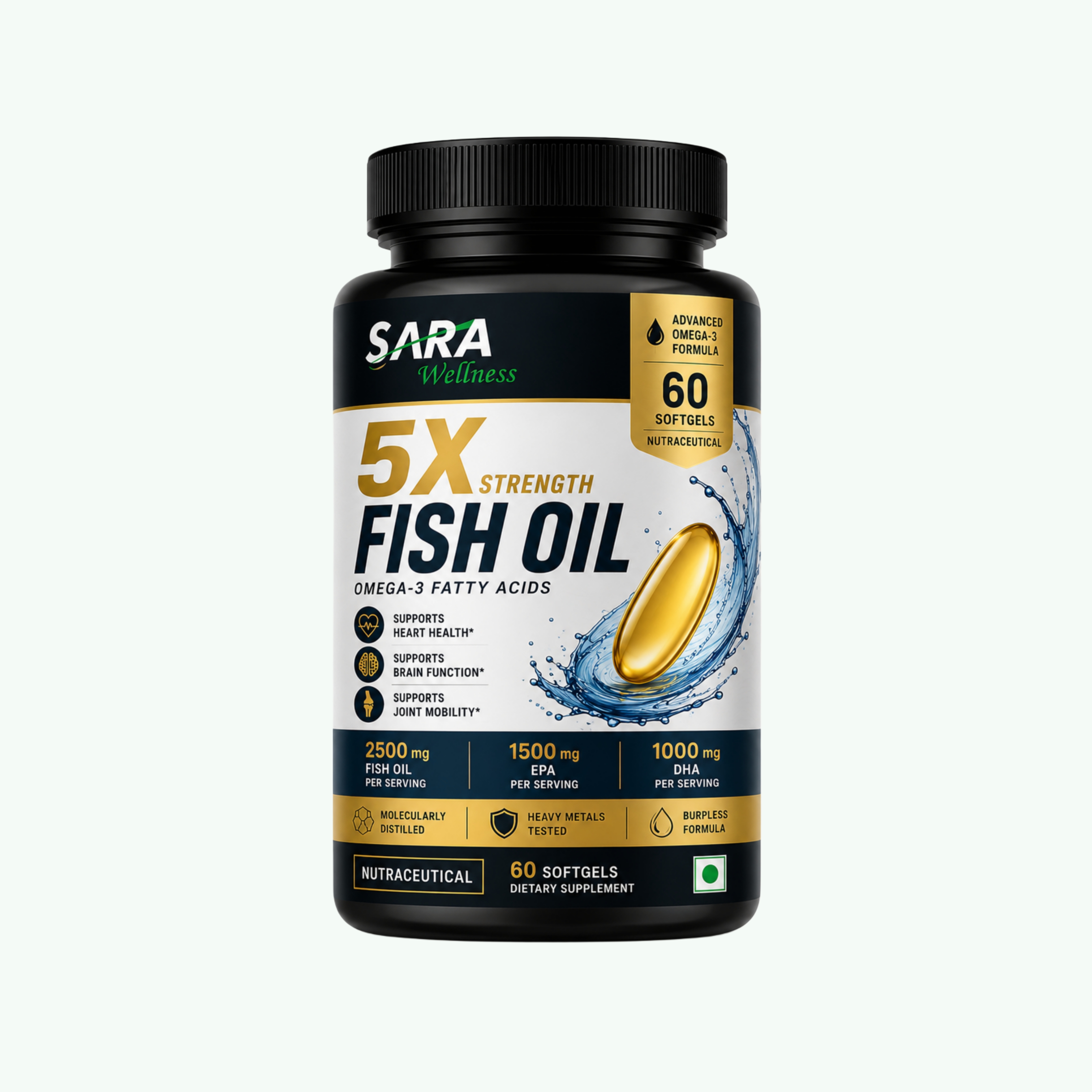
5X Strength Fish Oil 60's
There's a ceiling to how much you can concentrate fish oil before the softgel itself becomes the problem, and 5X Strength Fish Oil 60's sits right up against that ceiling on purpose. Five times the potency of a standard fish oil capsule means a buyer's end customer gets a meaningful daily EPA and DHA dose from a single softgel instead of reaching for a fistful of pills every morning. That single fact does more for repeat purchase behavior than any marketing claim printed on the bottle. Getting to that concentration requires molecular distillation carried out in careful, controlled passes, separating out mercury, dioxins and other contaminants while pulling omega-3 fatty acids up to a purity level raw fish oil never reaches on its own. The finished oil is kept in triglyceride form, not converted to ethyl ester, because triglyceride-form omega-3 is generally recognized as absorbing more completely in the body. Higher strength paired with better absorption is the actual selling point here, not just a bigger number on the label. Oxidation is the enemy of any concentrated fish oil, so every production run gets checked against TOTOX values before release, and the softgels themselves are engineered to reduce the fishy aftertaste and burping that turns a health-conscious buyer away from an entire product category. A 5X formula that leaves a bad taste behind isn't actually 5X anything in the customer's mind. It's just unpleasant. Wholesalers and pharmacy distributors stocking this SKU are usually chasing a specific shelf position: the premium, high-potency option that sits above the standard fish oil line and justifies a higher price point. We supply it both under our own brand and as a contract-manufactured private label product, matching capsule count, carton size and label specification to whatever the destination market expects. Every shipment leaves with a Certificate of Analysis, contaminant screening results and standard export documentation, because a premium product arriving without premium paperwork undermines the entire pitch. Fifteen years of exporting nutraceuticals from India means we've seen what makes a high-potency SKU succeed abroad and what sinks it at the port, and our process is built around the former.
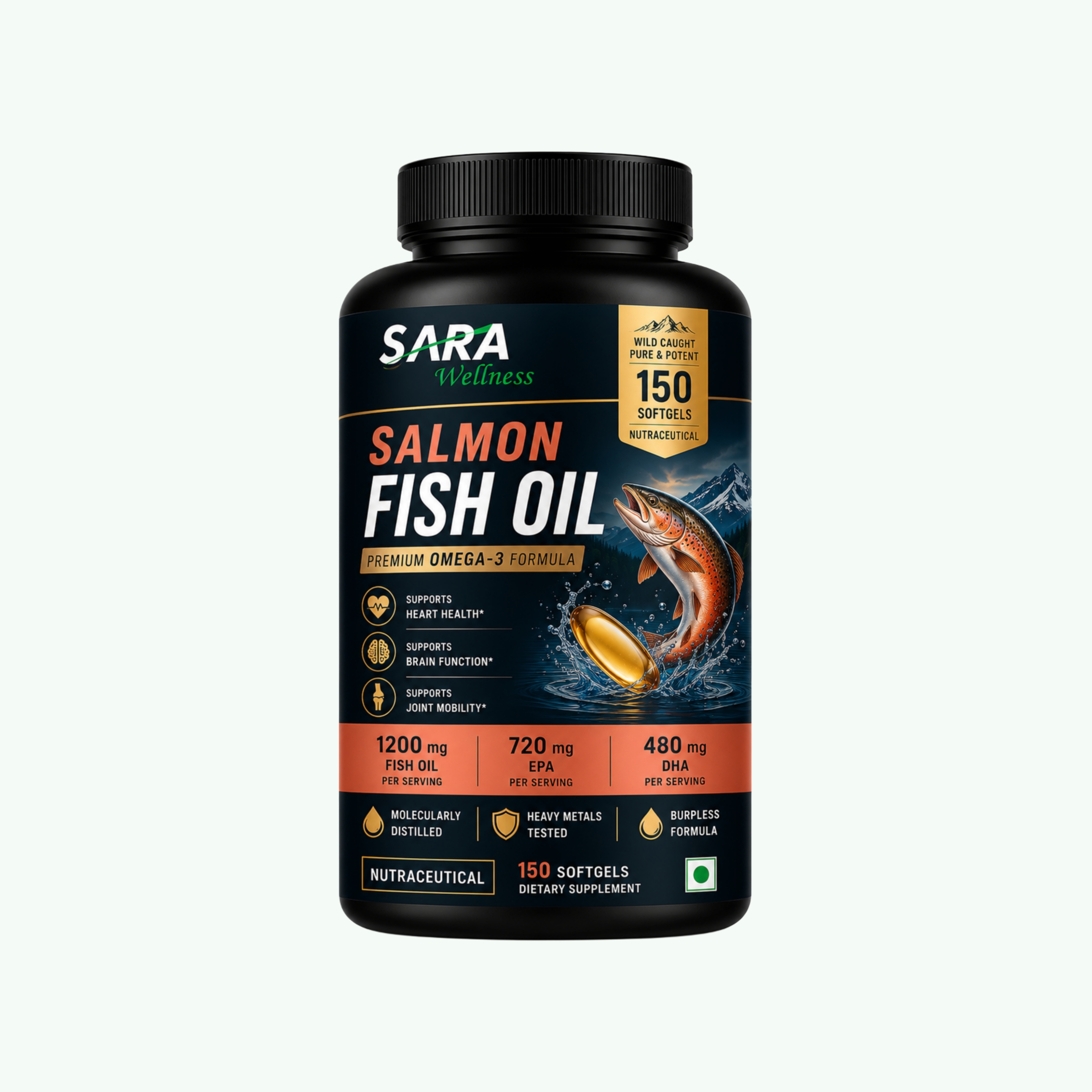
Salmon Fish Oil 150's
Salmon oil carries its own natural pigment, a soft orange-red that comes from astaxanthin, the same carotenoid that gives the fish its color in the first place. It isn't decoration. Astaxanthin is a genuine antioxidant that travels along with the EPA and DHA in this oil, and buyers who understand the ingredient list tend to see it as a point of difference from a plain anchovy or sardine-sourced fish oil. Salmon Fish Oil 150's is built around that whole-food character. Rather than stripping the oil down to isolated omega-3 concentrate alone, the formulation keeps the naturally occurring astaxanthin intact, giving distributors a product story that goes beyond a milligram count on the label. That said, the milligram count still holds up. EPA and DHA are present in meaningful, tested amounts, verified through gas chromatography on every production batch before release. A 150 count bottle is a five-month supply, which is a deliberately large format aimed at buyers running subscription models, bulk pharmacy contracts, or households that don't want to reorder every few weeks. Fewer reorders per customer per year means steadier demand planning on the distributor's end and a lower effective cost per capsule for the end buyer, both of which matter when you're trying to hold shelf space against competing brands. The oil goes through careful extraction and purification to keep contaminant levels low while preserving the natural compounds that set salmon oil apart, and every batch is checked for oxidation before it's cleared for packaging. Softgels are sized and shelled to swallow comfortably, since a large-format bottle is only useful if customers actually keep taking the product for the full five months. We supply this both under our own label and as a private label contract manufacturing option, adjusting capsule count and packaging to a buyer's specific brand requirements. Certificates of Analysis, contaminant screening and full export documentation accompany every consignment as standard, not as a special request. Fifteen years of exporting nutraceuticals from India means we know exactly what an importer's customs broker needs to see, and we make sure it's already in the folder before the container leaves port.
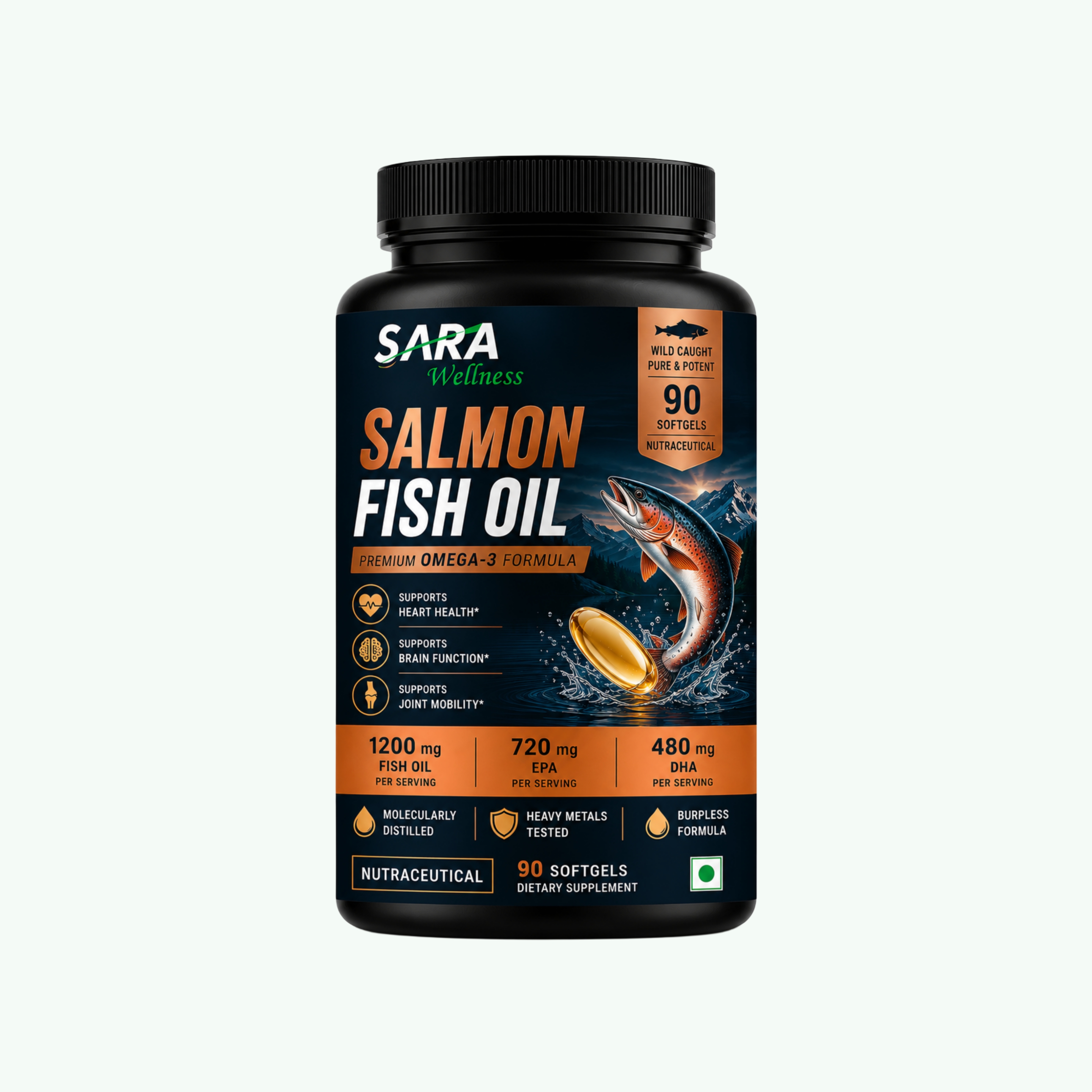
Salmon Fish Oil 90's
Ninety softgels, three months, one bottle. It's the standard size for a reason: it's long enough that a customer actually notices whether a supplement is working, and short enough that the bottle doesn't sit half-finished on a shelf gathering dust for a year. Salmon Fish Oil 90's in this format is the version most retailers reach for first when they're deciding how to introduce salmon oil into a product line that's mostly stocked plain anchovy or sardine fish oil. What makes salmon oil worth the shelf space next to a cheaper standard fish oil is the astaxanthin that comes along naturally with the EPA and DHA, a reddish-orange pigment with recognized antioxidant properties. It's not an additive stirred in after the fact. It's part of what makes salmon oil salmon oil, and the extraction process here is designed to keep it intact rather than processing it out in pursuit of a cleaner-looking, colorless oil. EPA and DHA levels are verified per batch through laboratory testing, not estimated from a generic industry average, and the oil is screened for oxidation before packaging to keep the finished softgel free of the rancid aftertaste that damages repeat purchase rates faster than almost anything else in this category. A capsule that tastes clean gets taken consistently. One that doesn't ends up in the back of a medicine cabinet. Distributors working across pharmacy, wellness retail, or e-commerce channels get a consistent product batch to batch, backed by a Certificate of Analysis covering potency and contaminant limits with every order. Contract manufacturing is available for buyers who want their own branding on this formulation, with capsule count and carton configuration adjusted to match the target market's expectations rather than forcing a fixed template. We've been exporting fish oil and other nutraceuticals out of India for fifteen years, working with flexible minimum order quantities for new buyers and full container programs for established ones, and every shipment leaves with the documentation an importer's customs broker will actually ask for, not a partial file that causes delays at the port.
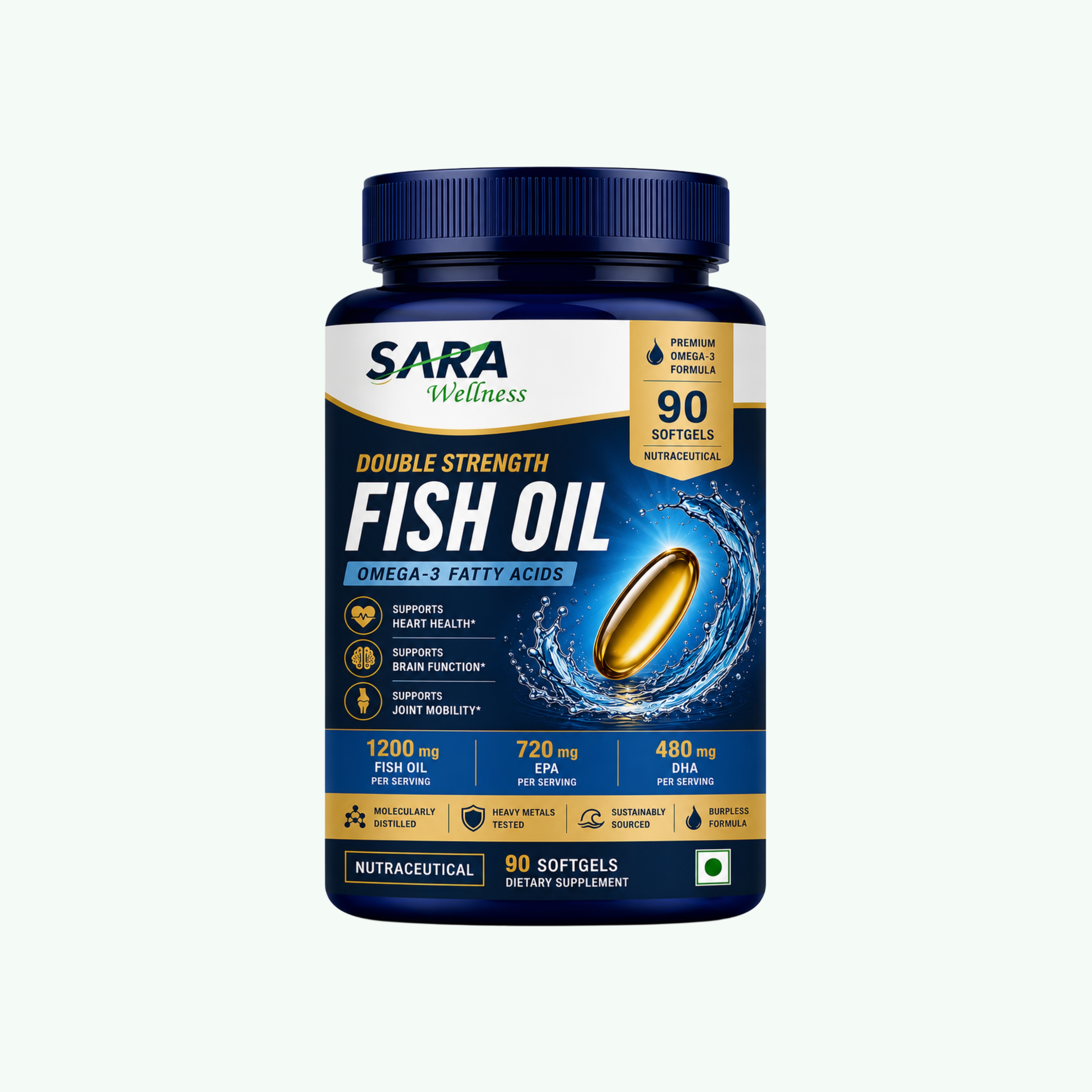
Double Strength Fish Oil 90's
Same Double Strength Fish Oil 60's formulation, larger bottle. Ninety softgels stretches the double-strength dose out to a three-month supply, which is the count most pharmacy chains default to when a mid-tier omega-3 product moves off the shelf reliably and doesn't need the smaller trial-size packaging that a newer SKU might. The oil behind this capsule is molecularly distilled to roughly double the EPA and DHA concentration of a standard fish oil softgel, kept in triglyceride form for the absorption advantage that form generally holds over ethyl ester concentrates. Distillation also removes mercury and other contaminants picked up further down the supply chain, and every batch is checked against TOTOX oxidation limits before it's cleared for filling. A larger bottle only pays off if the customer keeps taking the product for the full three months without the capsule turning unpleasant halfway through, so freshness control matters just as much here as potency. Nobody finishes a bottle that starts smelling off by month two, no matter how strong the initial formula was. For distributors, the 90 count version of a proven mid-tier SKU is usually the safer bulk order once demand for the smaller pack has already been tested. We manufacture this under private label with adjustable capsule counts and packaging specifications, alongside supplying it under our own brand for buyers who prefer a ready-made product line. Certificates of Analysis, contaminant screening results and full export paperwork accompany every shipment as standard. Fifteen years of exporting nutraceuticals from India means the documentation is ready before the buyer even has to ask for it, which tends to matter more at customs than any claim printed on the bottle.
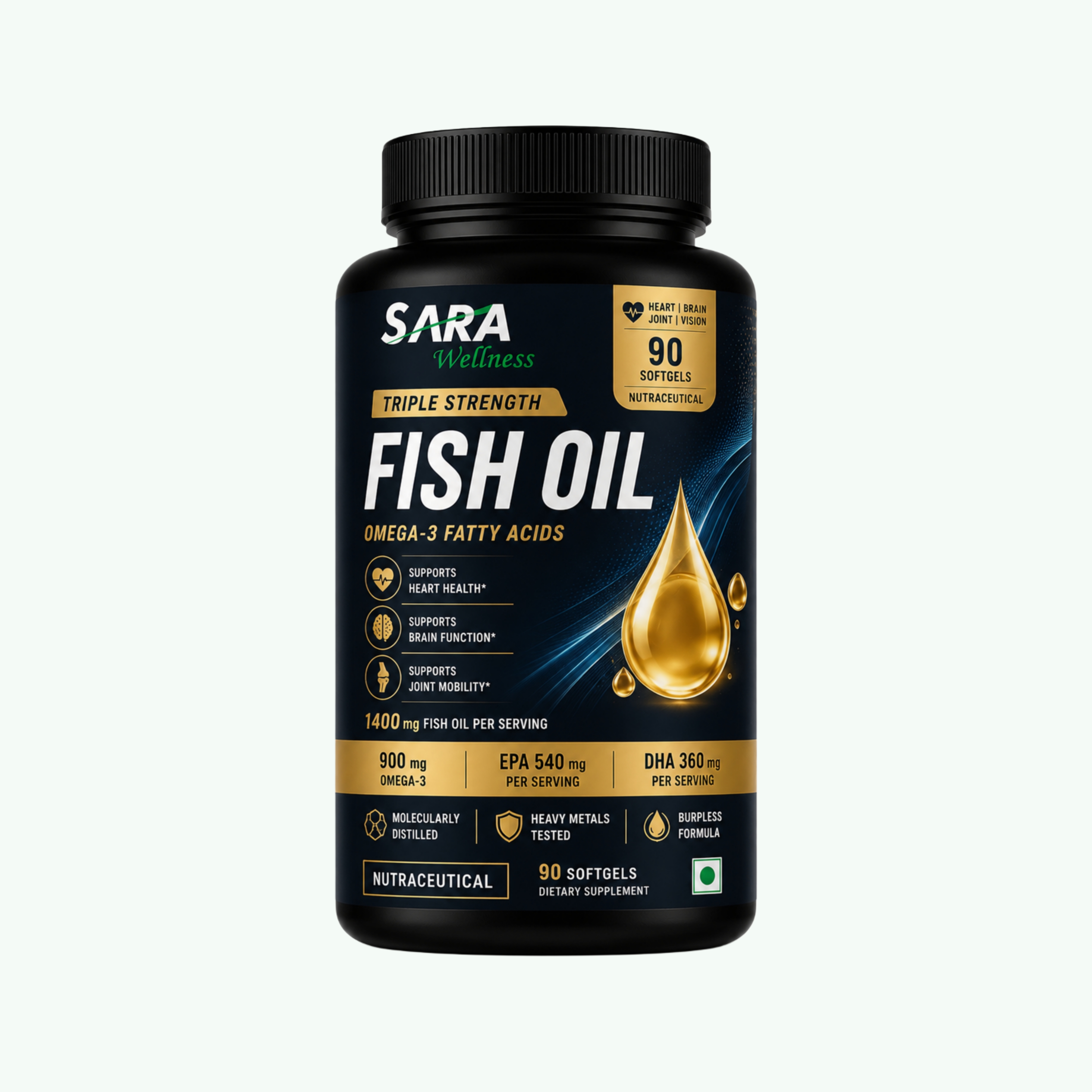
Triple Strength Fish Oil 90's
A buyer sourcing fish oil rarely asks how many capsules are in the jar first. They ask how much EPA and DHA actually sit inside each one, because that number decides whether a customer takes one capsule a day or three. Triple Strength earns its name honestly here. Each softgel is formulated in the natural triglyceride form, the same molecular structure omega-3 takes inside a fish, and independent absorption research keeps pointing to this form over ethyl ester concentrates. Fewer capsules, same daily target, happier end consumer. The oil goes through molecular distillation before it ever reaches the softgel line. That step pulls out heavy metals, PCBs and other contaminants that raw fish oil tends to carry, and it pushes concentration well above what standard-strength fish oil delivers per capsule. Freshness is tracked through TOTOX values, the industry's way of measuring oxidation, and we keep batches within the range that reputable buyers expect before they even ask. Ninety softgels lands a full three-month supply into one bottle, which matters more than it sounds for a wholesaler planning shelf turnover or a pharmacy chain managing repeat purchase cycles. Smaller reorder frequency, steadier inventory, less warehouse clutter. The gelatin shell is manufactured to swallow easily, and batches are formulated to minimize the fishy aftertaste that turns first-time buyers into one-time buyers. We manufacture and pack this under contract for private label partners as readily as we supply it under our own brand, and both routes get identical quality control. Certificates of analysis travel with every shipment, covering heavy metal screening, microbial testing and potency verification, because an importer clearing customs with a supplement consignment does not want to be explaining missing paperwork to a regulator. Sourcing decisions for a product like this usually come down to three questions: is the strength real, is the documentation complete, and will the exporter still answer emails six months after the invoice clears. We have been answering exactly that combination of questions for international distributors and wholesalers for fifteen years, with flexible minimum order quantities for buyers testing a new market and full container support for those scaling an established one. Communication stays direct and specific, not routed through three layers of a sales team. Whether you are stocking a pharmacy chain in the Gulf or building a private label nutraceutical line in Southeast Asia, this is the kind of product where the paperwork should be as strong as the softgel itself.
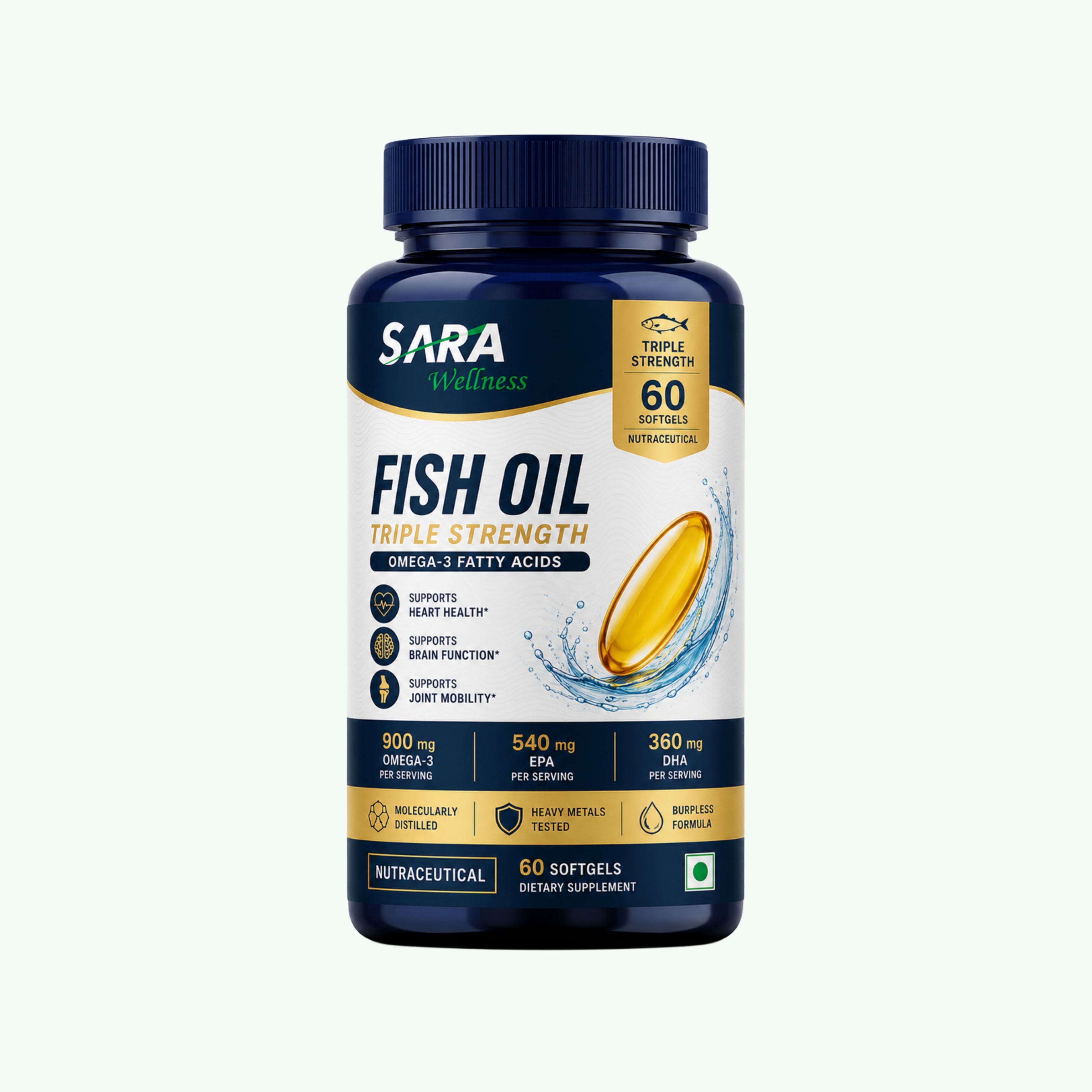
Triple Strength Fish Oil 60's
Sixty capsules is a two-month bottle. That's the entire pitch, really, and it works because plenty of pharmacy buyers and online retailers prefer a smaller unit that turns over faster on the shelf than a bulkier 90 or 120 count jar. Same triple-strength formulation, same triglyceride-form EPA and DHA, just sized for a different kind of buyer. The oil is molecularly distilled to concentrate omega-3 content well past what a standard-strength fish oil capsule can offer, which means the potency claim on the label is not decoration. It reflects a real, tested number. Every batch is screened for heavy metals and checked against TOTOX benchmarks before release, because rancid or oxidized fish oil is the single fastest way to lose a repeat customer. Nobody reorders a supplement that leaves a fishy burp behind for an hour. Softgels are engineered for easy swallowing and formulated to minimize that exact aftertaste problem. Distributors stocking pharmacy chains, wellness stores, or e-commerce fulfillment centers get a product that behaves the same way batch after batch, which honestly matters more to a repeat B2B buyer than almost anything else. Consistency sells itself; surprises do not. We run this as both a branded line and a contract manufacturing option, formulating to a buyer's own label specifications, artwork and packaging when private label is the goal. Minimum order quantities flex around what a new market actually needs rather than forcing a first-time importer into a container-load commitment before they have tested demand. Full documentation, including Certificates of Analysis and export paperwork, travels with every shipment as standard practice, not an add-on request. Fifteen years of exporting nutraceuticals out of India has taught us that the buyers who come back are the ones who got straight answers the first time. That's the relationship we aim for here, whether you're a distributor in Africa restocking a regional chain or a startup wellness brand in Europe testing your first import.
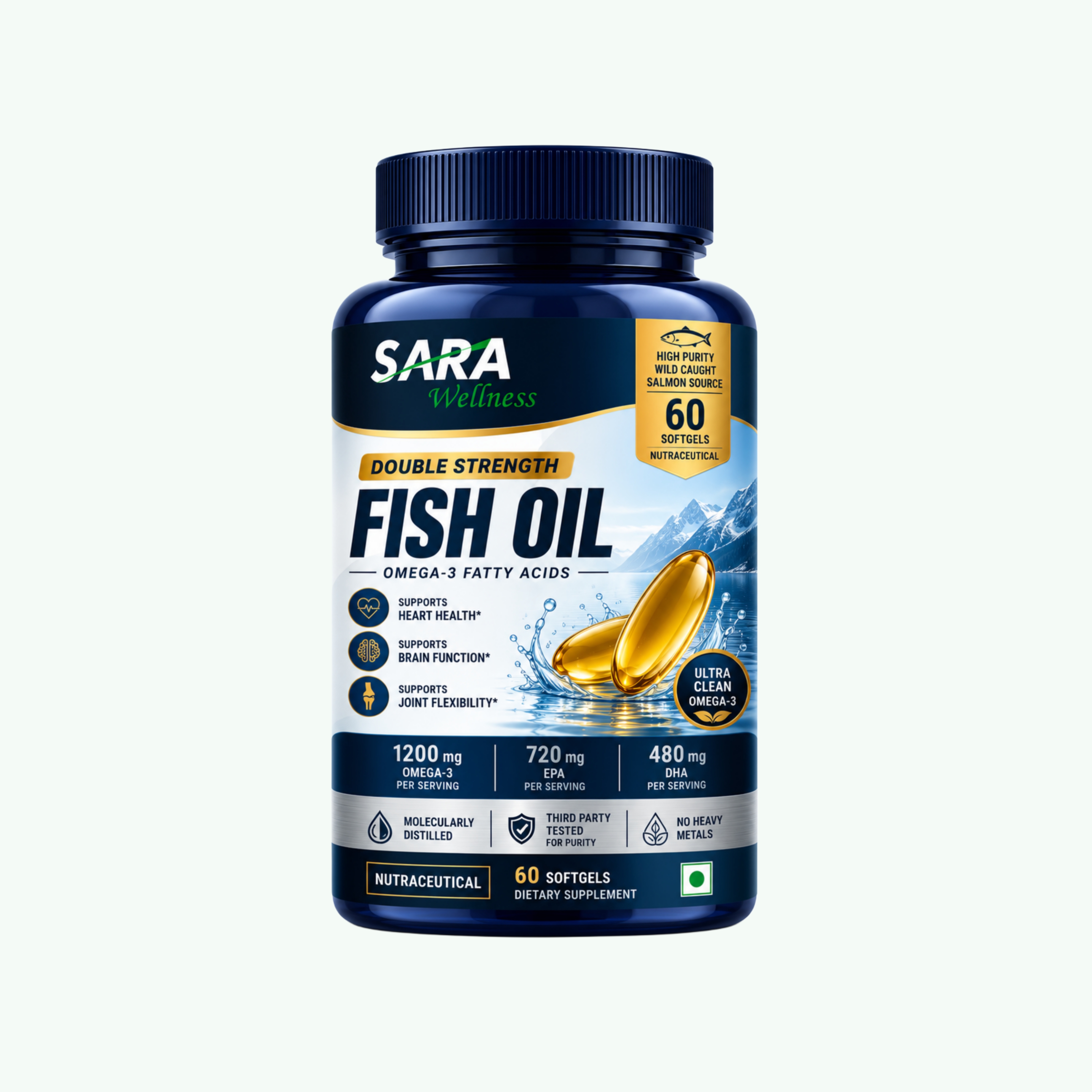
Double Strength Fish Oil 60's
Double strength sits in a comfortable middle ground: enough concentrated EPA and DHA per softgel to beat a plain, standard-strength fish oil, without chasing the premium price tag that a 5X formula tends to carry. For a lot of pharmacy buyers stocking a mid-tier omega-3 shelf option, that middle ground is exactly where the volume sits. Double Strength Fish Oil 60's is molecularly distilled to roughly double the omega-3 concentration of a basic fish oil capsule, keeping the EPA and DHA in their natural triglyceride form rather than converting to a cheaper ethyl ester concentrate. The distillation process also strips out mercury and other contaminants that raw, unrefined fish oil tends to carry, which matters just as much to a regulator reviewing an import file as it does to the end consumer swallowing the capsule. Freshness testing against TOTOX oxidation values happens on every production batch before release, because a double-strength oil that's gone slightly rancid is a worse experience than a standard-strength one that's still fresh. Concentration without freshness control is just a faster way to deliver a bad aftertaste. This SKU works well as a private label anchor product, the one a distributor builds a broader omega-3 range around before adding a triple-strength or premium salmon variant alongside it. We manufacture it under contract with a buyer's own branding and packaging specification just as readily as we supply it under our own label, and capsule count can be adjusted to match whatever unit size a specific market prefers. Every shipment includes a Certificate of Analysis covering potency and contaminant screening, along with the standard export documentation an importer's customs broker will expect. Fifteen years of exporting nutraceuticals from India has taught us that a mid-tier product still needs top-tier paperwork behind it, because that's usually where cost-conscious buyers scrutinize the hardest.
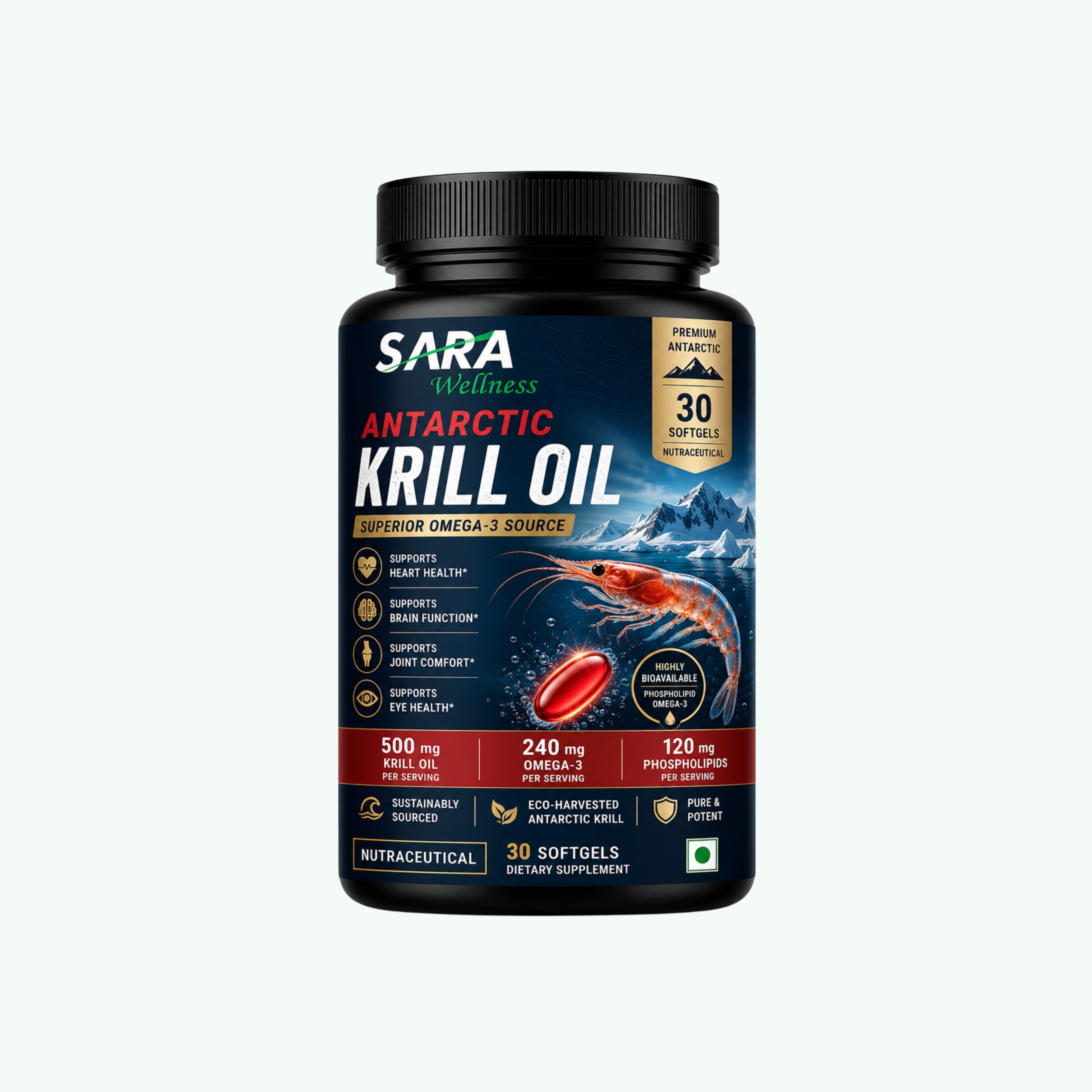
Antarctic Krill Oil 30's
Ask anyone who's tried both, and the pitch for krill oil over fish oil almost always comes down to one word: burp. Krill oil binds its omega-3 fatty acids to phospholipids rather than storing them as triglycerides the way fish oil does, and that structural difference is generally credited with better absorption and noticeably less of the fishy aftertaste that sends a lot of first-time fish oil buyers looking for an alternative. Antarctic Krill Oil 30's is sourced from Antarctic krill, tiny shrimp-like crustaceans harvested from some of the cleanest waters left on the planet, which gives the finished oil an inherently low contaminant baseline before any purification even begins. The oil carries a natural reddish tint from astaxanthin, a carotenoid antioxidant that comes bundled in for free alongside the EPA and DHA, along with phosphatidylcholine, a phospholipid recognized for supporting cell membrane and brain health. A 30 count bottle is a one-month trial size, the format that lets a distributor introduce krill oil as a premium alternative sitting above standard fish oil on the shelf without over-committing on inventory before gauging actual demand. Krill oil commands a higher retail price point than plain fish oil almost everywhere, and buyers generally understand why once they see the phospholipid and astaxanthin content spelled out clearly on the label. One thing worth flagging honestly to any importer: krill is a crustacean, so this product carries a shellfish allergen declaration, unlike fish oil sourced from anchovy or sardine. That's a labeling detail, not a drawback, but it needs to be on the packaging correctly for the destination market. We supply Antarctic Krill Oil 30's under our own brand and as a contract-manufactured private label product, with capsule count and packaging adjusted to a buyer's specifications. Every batch ships with a Certificate of Analysis covering potency, oxidation and heavy metal screening, alongside standard export documentation. Fifteen years exporting nutraceuticals out of India means we know exactly what paperwork a krill oil shipment needs to clear customs cleanly, allergen labeling included.